Overview —
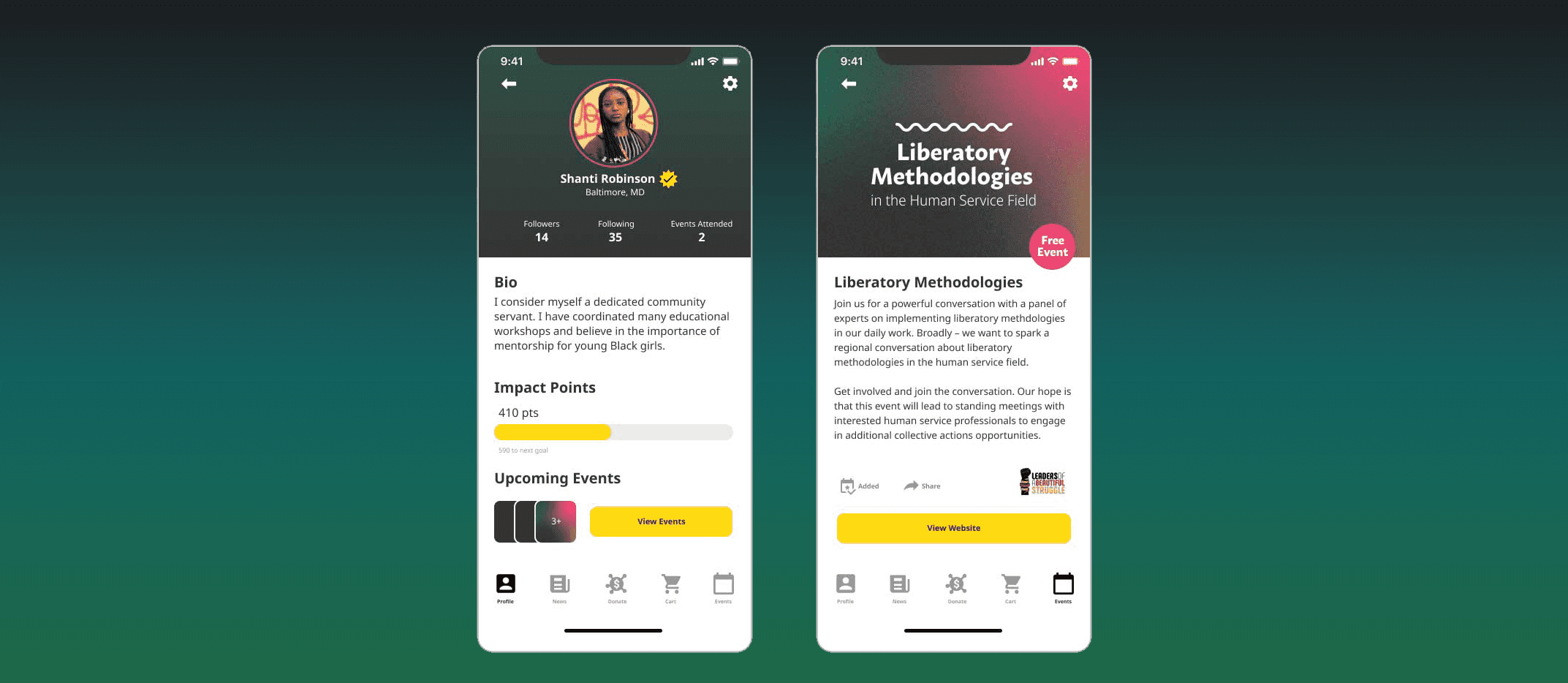
Leaders of a Beautiful Struggle (LBS), needed a mobile platform to securely connect supporters with events, volunteer opportunities, donations, and news.
I worked with Baltimore nonprofit, LBS, a “grassroots think-tank which advances the public policy interest of Black people in Baltimore” to create an app concept that prioritized trust, accessibility, and engagement through light gamification. My work resulted in user testing sessions, paper to digital prototypes, and a final site map with 28 screen mockups.
Role —
Duration —
Tools —
THE CORE CHALLENGe
How can we incentivize volunteers to make small donations and connect with other volunteers in their network?
"Information alone does not reliably change behavior. This is a common mistake people make, even well-meaning professionals. The assumption is this: If we give people the right information, it will change their attitudes, which in turn will change their behaviors."
-B.J. Fogg, author of Persuasive Technology and Tiny Habits
THE PROBLEM SPACE
Donation Challenge
One of the core challenges was designing a donation experience for a volunteer base that skewed younger and primarily millennial, with most contributions averaging $30 or less per donation. Rather than optimizing for large, one-time gifts, the app needed to support frequent, low-friction giving while reinforcing a sense of impact and participation.
Product Maturity Challenge
This project began at a true zero-to-one stage, before any app existed, which meant research was happening in parallel with design. Early user testing focused on validating foundational assumptions around navigation, feature prioritization, and user motivation. Additionally, users are reluctant to join spaces without an existing community, so the product strategy accounted for a phased rollout, beginning with a limited beta to seed engagement, test features, and iterate before broader adoption.
background research
Facilitating microphilanthopy
There are many ways in which organizations like LBS can incentivize their target audience of Millennial donors, by focusing on examples used to promote microphilanthropy behavior in mobile apps. It’s important to provide options for monthly giving for donor campaigns, and donors who give regular gifts do so because they had “access to information that proved the impact of their contributions”. Additionally, volunteers are twice as likely to donate to an organization.
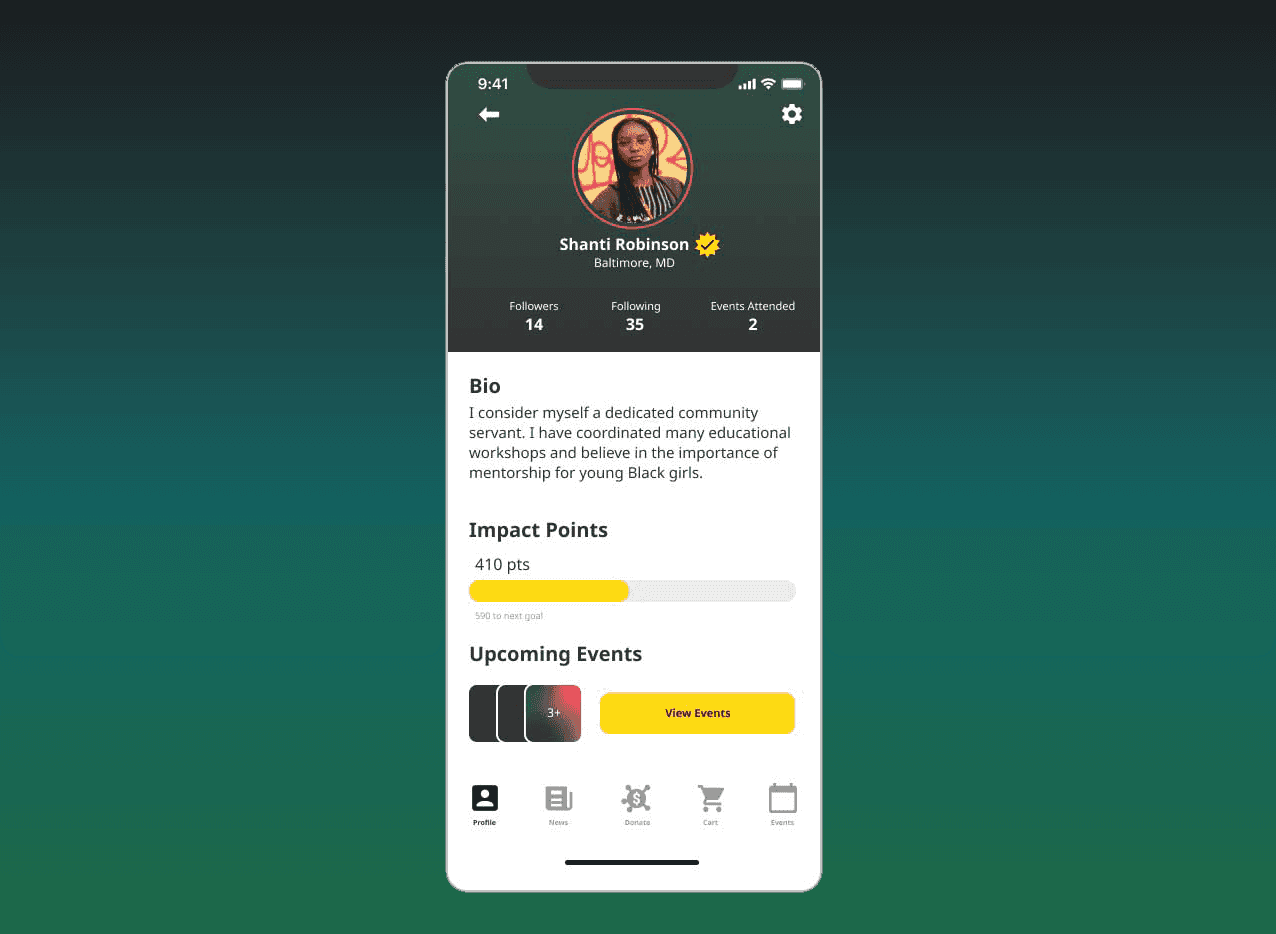
Further, by integrating gamification of ‘points’ on the profile screen, the user can immediately see their impact and track their goals for event participation and donating. While a donor may have the altruistic motivation and economic resources to give, people also need triggers to facilitate a behavior to be actionable, according to Fogg's Behavior Model below.
Visual organization was a huge focus as well, along with design consistency and reducing clutter, with consideration for reducing the risk of content overload.
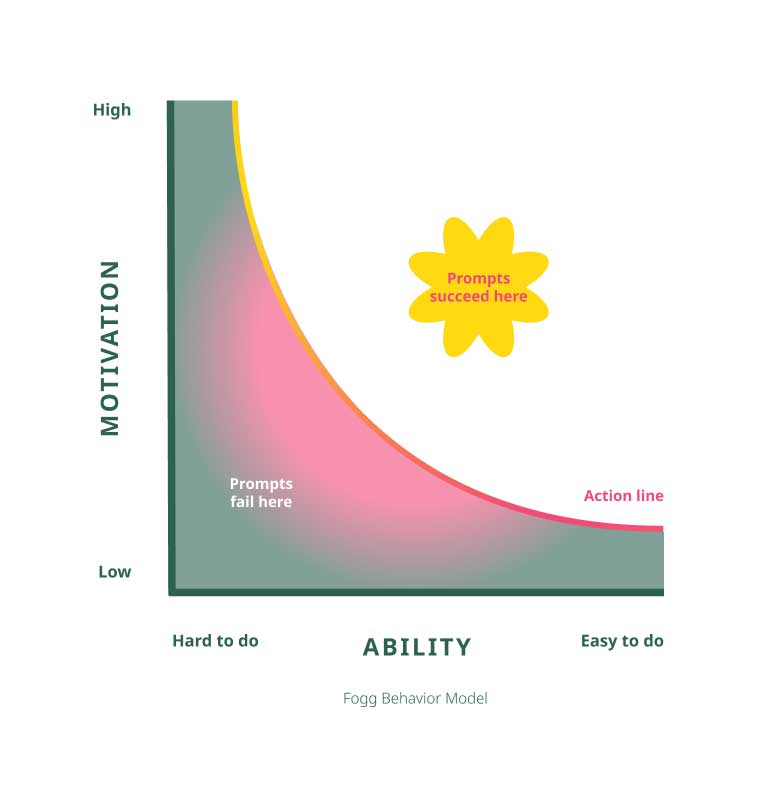
According to BJ Fogg, there are three major components for understanding human behavior: motivation, ability (to perform the behavior), and triggers. Alerts on an app, social media notifications, or emails can be impactful persuasions that provide the external influence which many donors need.
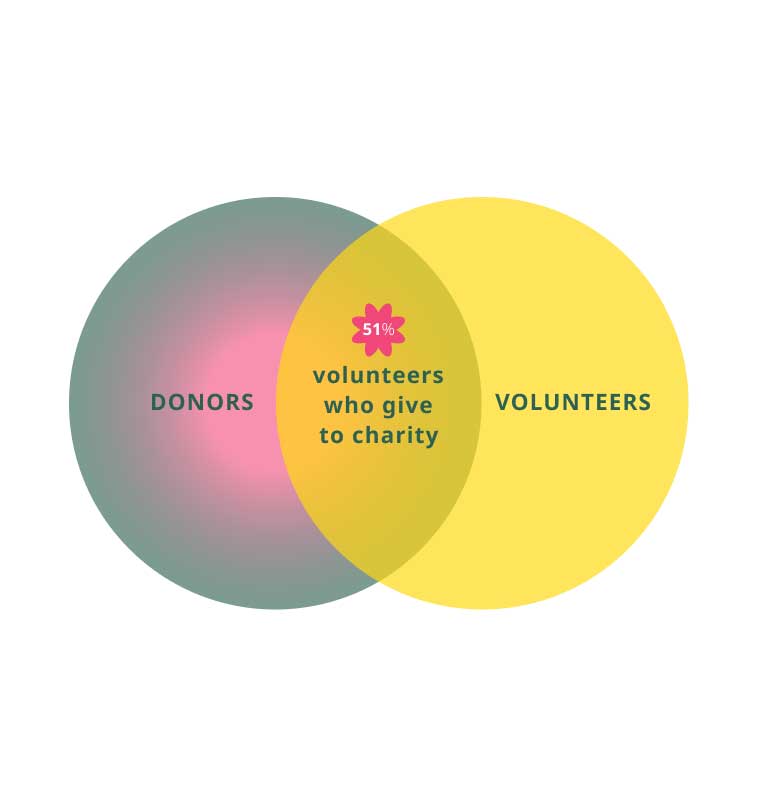
If volunteers are twice as likely to donate to an organization, then we should create avenues to make this easier.
research methods
Creating paper prototypes
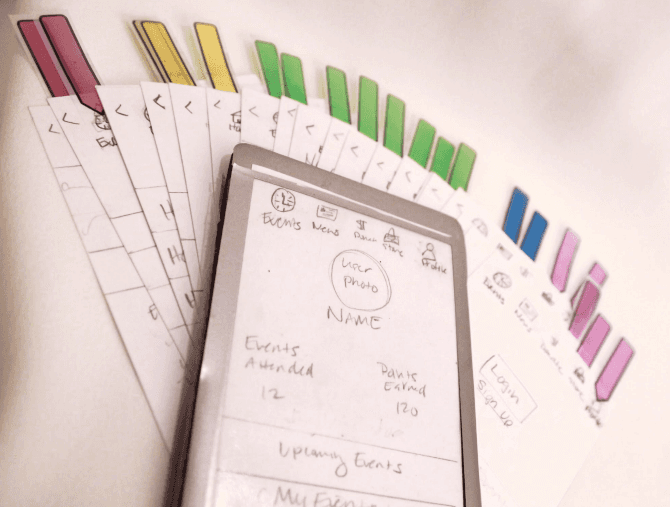
For the first phase of the design process, we chose to begin with making a paper prototype of the app. This way, we could get feedback that we could incorporate in real time, erasing and revising as we went to remove friction for the next user. The prototype had multiple pages that we could insert and remove with each "click".
At times, we changed the script order so that we could ensure that the user wasn’t readily “primed” for other tasks. That way, we could make sure that the task flows made sense from different endpoints and flow directions.
Selecting user testers
Because LBS’s target audience is largely focused on individuals in their 20’s to early 30’s, we approached people walking through the University of Baltimore’s student center to participate in a user study research using paper prototyping methods.
We asked our participants to provide us with background information about their age, job, and whether they donate or volunteer regularly. Almost all participants said that they are active in nonprofits in some way, most donating in amounts less than $30 at a time.
Then, we asked them to walk us through how they would approach various tasks and watching in real time how they responded, struggled, or succeeded. Only one of our participants was already familiar with the mission of Leaders of a Beautiful Struggle. Yet all of them were willing to suspend their disbelief in using the prototypes like a real phone. And even commenting on actual ways they would interact on the pages, for example looking for free food on an event page!
research methods II
Digital Prototyping
Next, we gathered more users to test the prototype on their computers, while a researcher watched and made notes on the difficulty of each task. The User Task Scenarios were as follows:
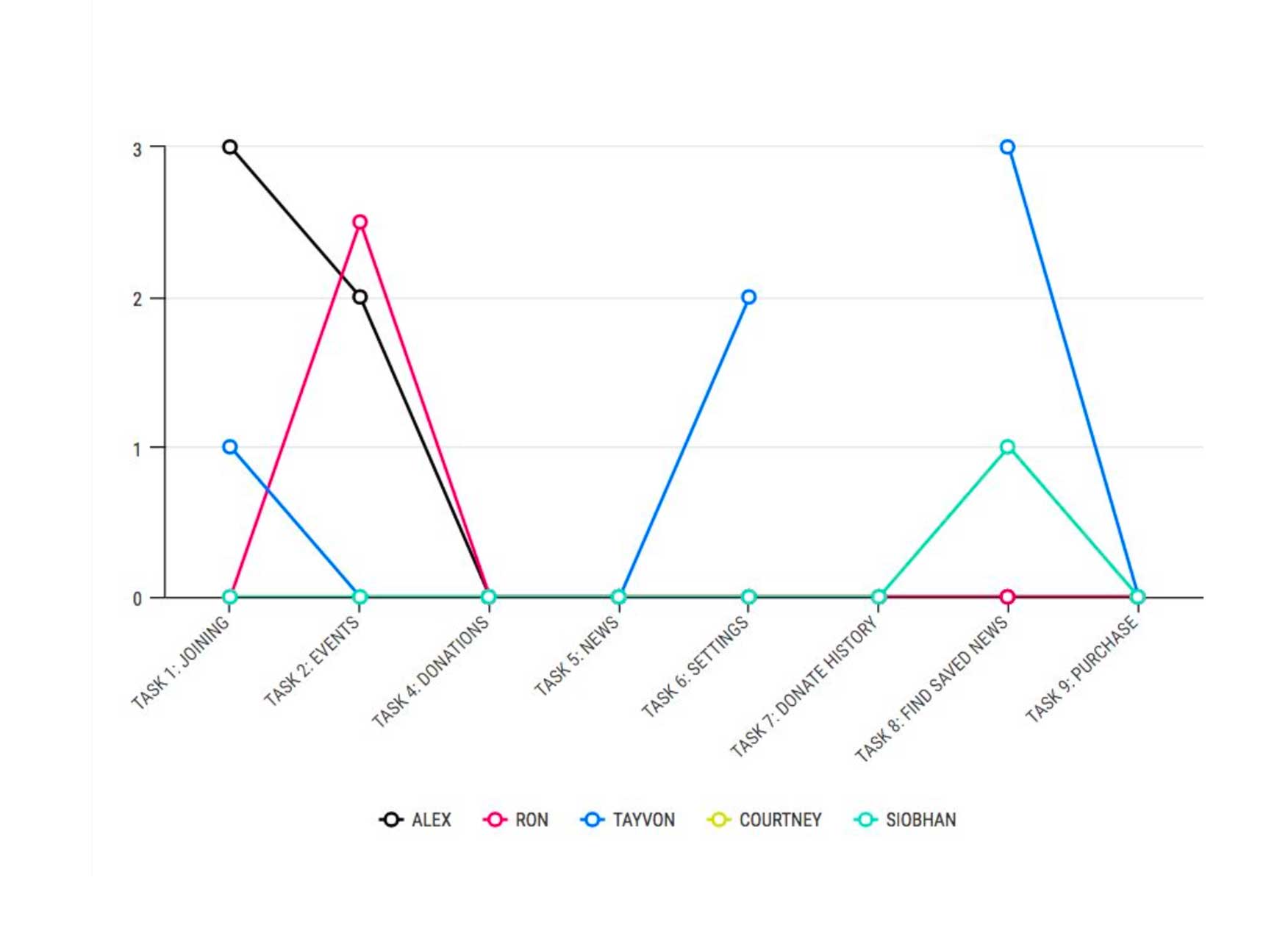
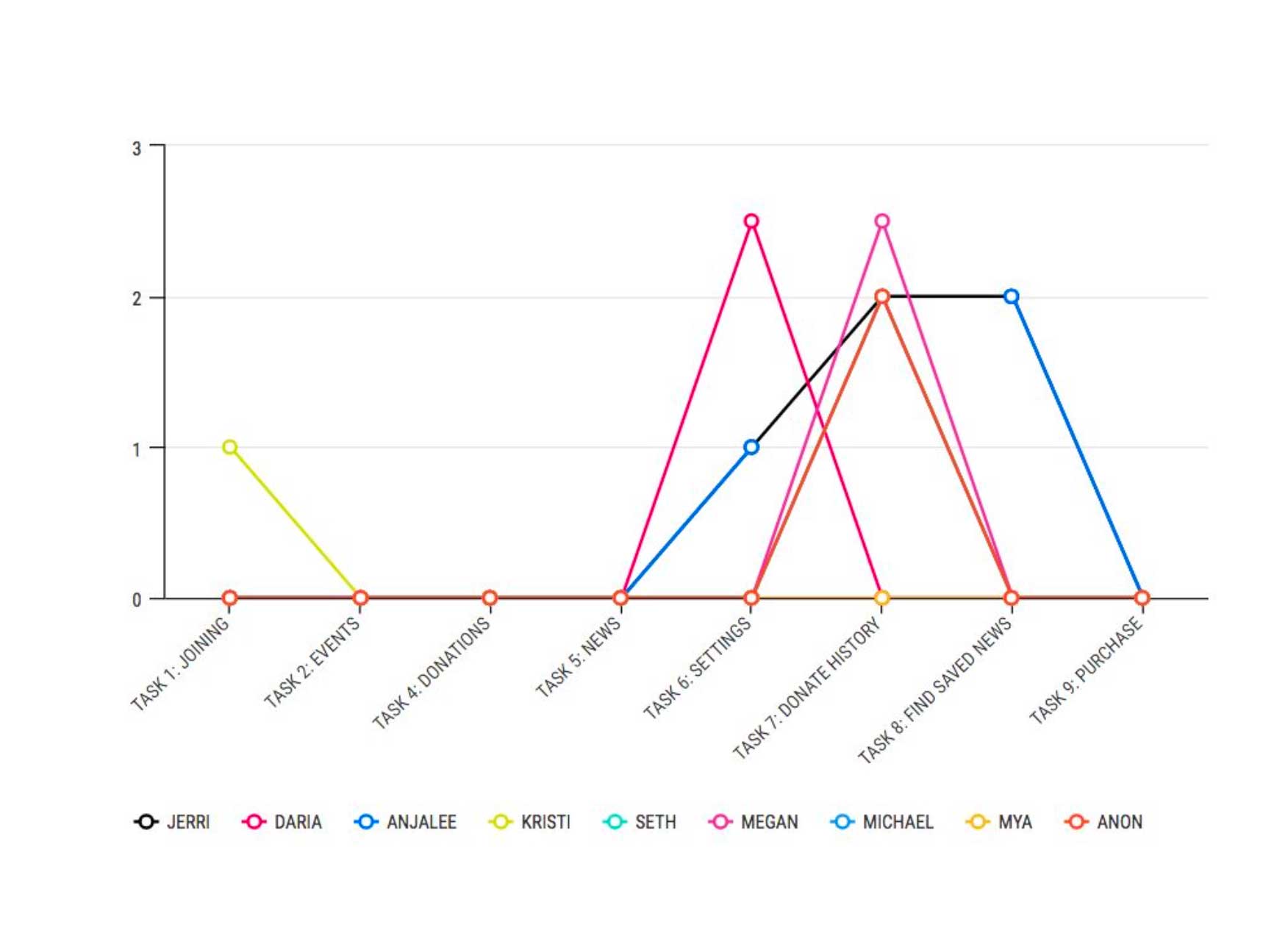
This graph shows the combined results of tech prototyping. The ‘y’ axis shows varying levels of difficulty.
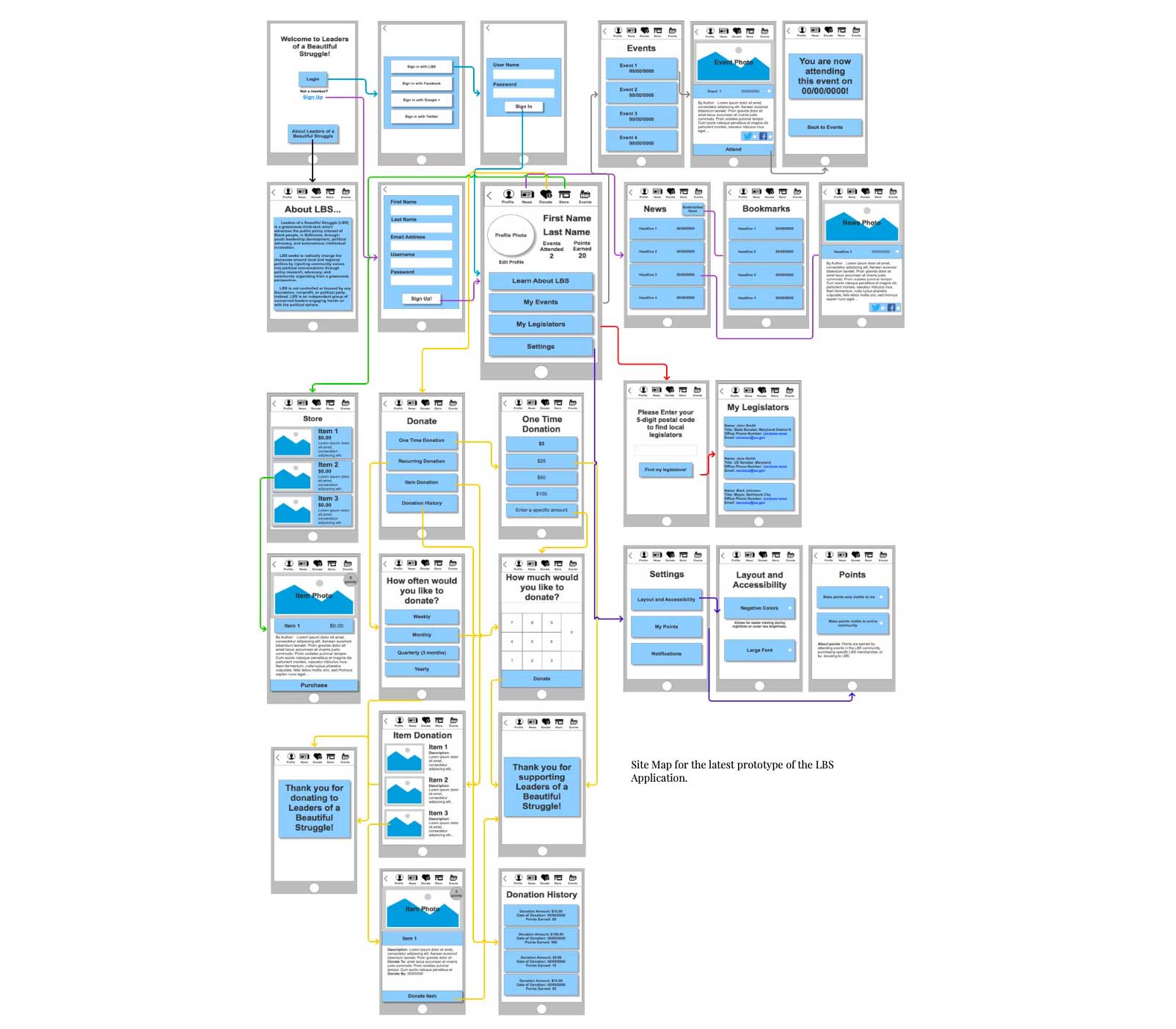
Working site map of 28 screens used for digital user testing
DESIGN revisions
Incorporating user feedback
A few friction points we encountered, and revised in the next design iteration:
Our testers expressed that they wanted more settings options, and more nuanced options to integrate with social media.
Evolved the Impact points to a tracker that levels up, inspired by crowd-funding sites.
Streamlined the interface design, and favoring other layout options over cluttered buttons (for example the Upcoming Event sections.)
Flipping the icons to the bottom section for easier thumb access.
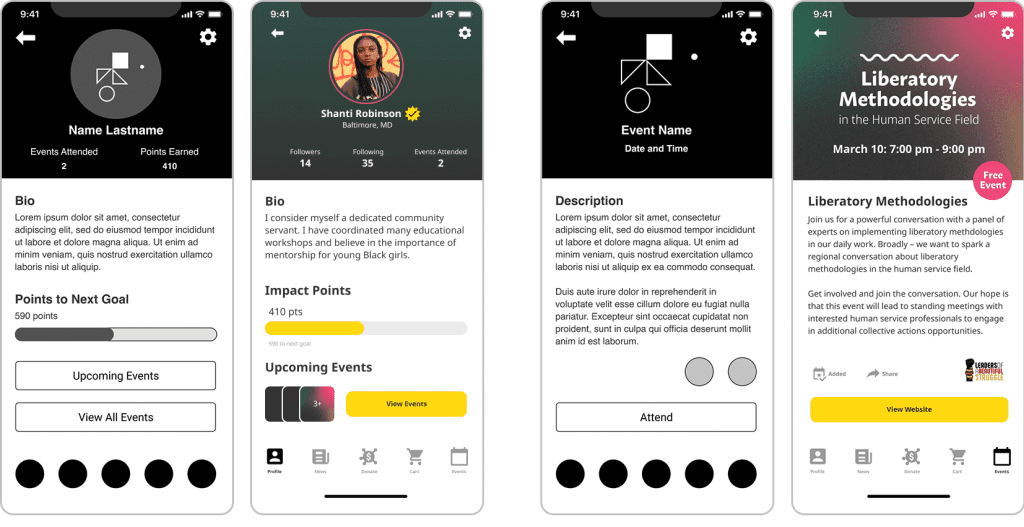
UI refinement of the Profile page
Final Designs and Next Steps
A few additional changes, and what I would test next:
Exploring the layout on the Full Calendar and News pages with more focused detail, and testing to consider removing the ‘Shop’ page.
A verification system implemented to help protect the safety of the LBS social justice community from trolls, and worst case scenario, doxxing.
Follow the analytics once the product is launched to see where donation improvements can be made, or even try A/B beta testing to track engagement and donation outcomes.
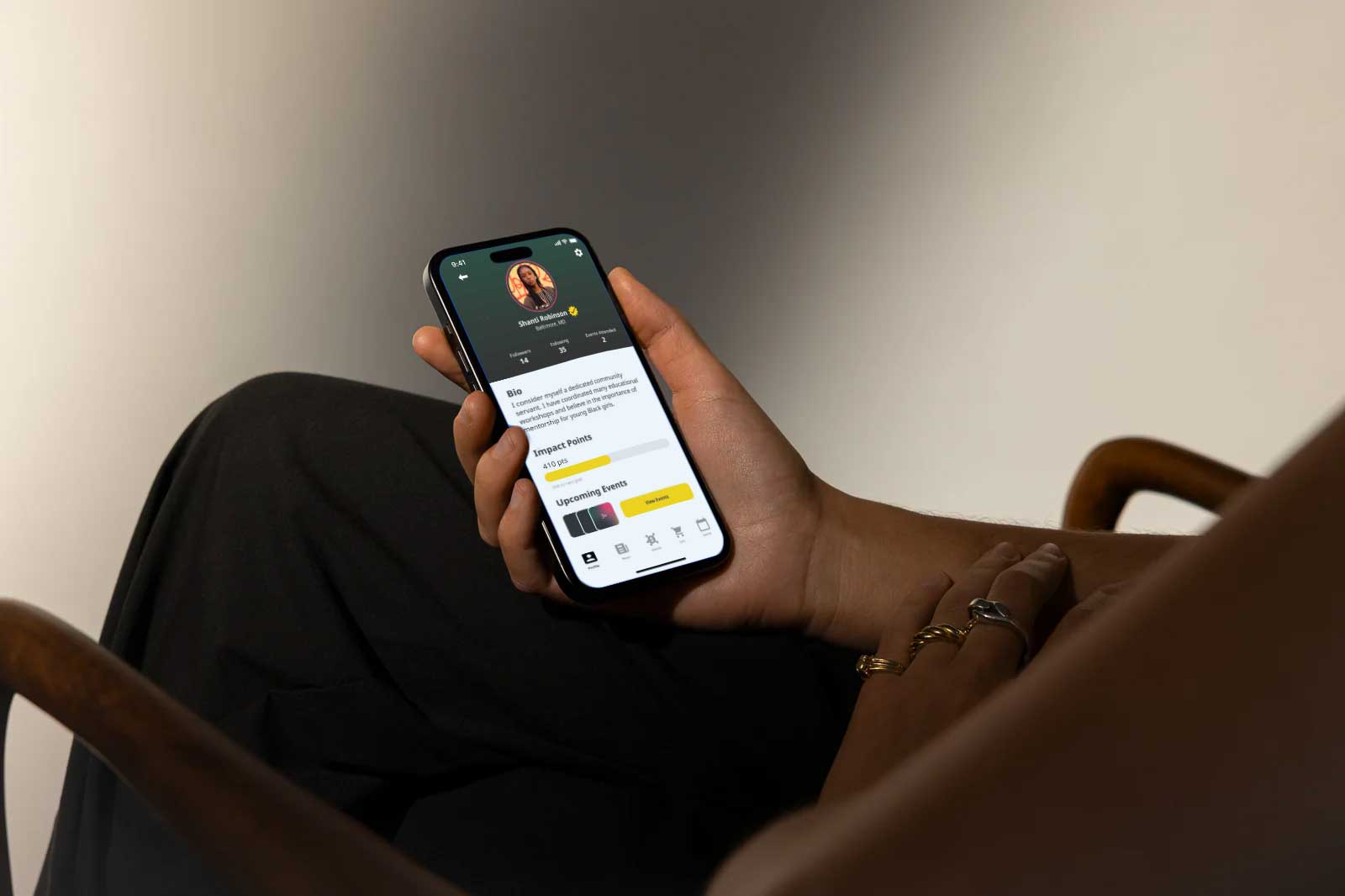
Results
This project demonstrates how research-driven information architecture and early usability testing can meaningfully increase participation, trust, and repeat engagement in mission-driven products.
Lorem ipsum dolor sit amet, consectetur adipiscing elit, sed do eiusmod tempor incididunt ut labore et dolore magna aliqua. Ut enim ad minim veniam, quis nostrud exercitation ullamco laboris nisi ut aliquip ex ea commodo consequat.
-Name